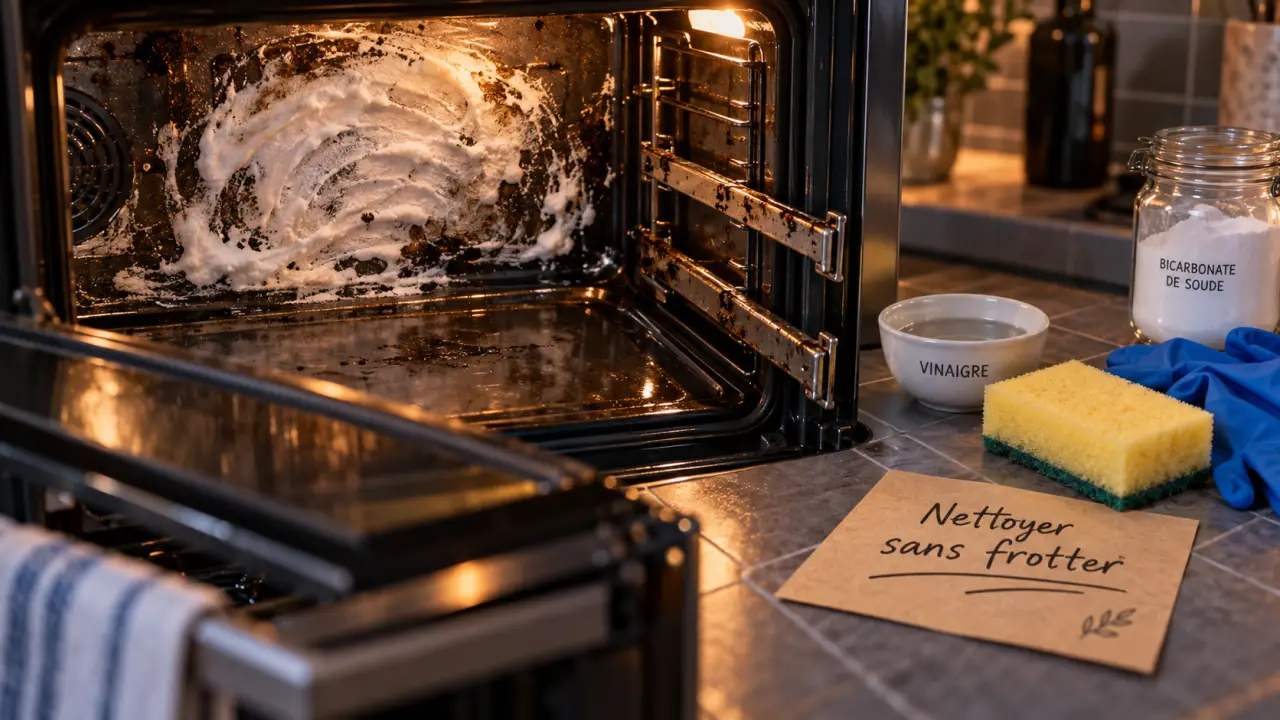
A dirty oven does not always need aggressive scrubbing. The best method depends on the residue: fresh splatters, a greasy film, or hard, baked-on grime. Let the oven cool completely, remove the racks, and check the owner’s manual before choosing a cleaning method.
Choose the right cleaning method for the level of grime
Manual cleaning is usually the safest all-round option because you control where the product goes and how much pressure you use. A baking soda paste suits light to moderate grease and routine deep cleaning. A commercial oven cleaner with a specialized degreaser is more appropriate for thick, sticky buildup. Use the self-clean or steam-clean function only when your oven supports it and the manual permits it.
| Method | Best for | What to expect |
|---|---|---|
| Baking soda paste | Light to moderate grime | Low-odor cleaning with an overnight waiting period |
| Commercial oven cleaner | Heavy baked-on grease | Faster degreasing, but ventilation and gloves are essential |
| Steam-clean feature | Fresh spills and light soil | Helps loosen residue before wiping |
| Self-clean cycle | Approved ovens with heavy soil | Very high heat for a few hours; follow the manual closely |
Self-clean cycles can reach 800 to 1000 degrees Fahrenheit. This heat turns residue to ash, but it can also create smoke and odors. It is not a universal shortcut. Remove loose debris first and check whether the racks, liners, or other accessories must come out before you start.
Clean the oven cavity without damaging its finish
Use an overnight baking soda paste for a gentler deep clean
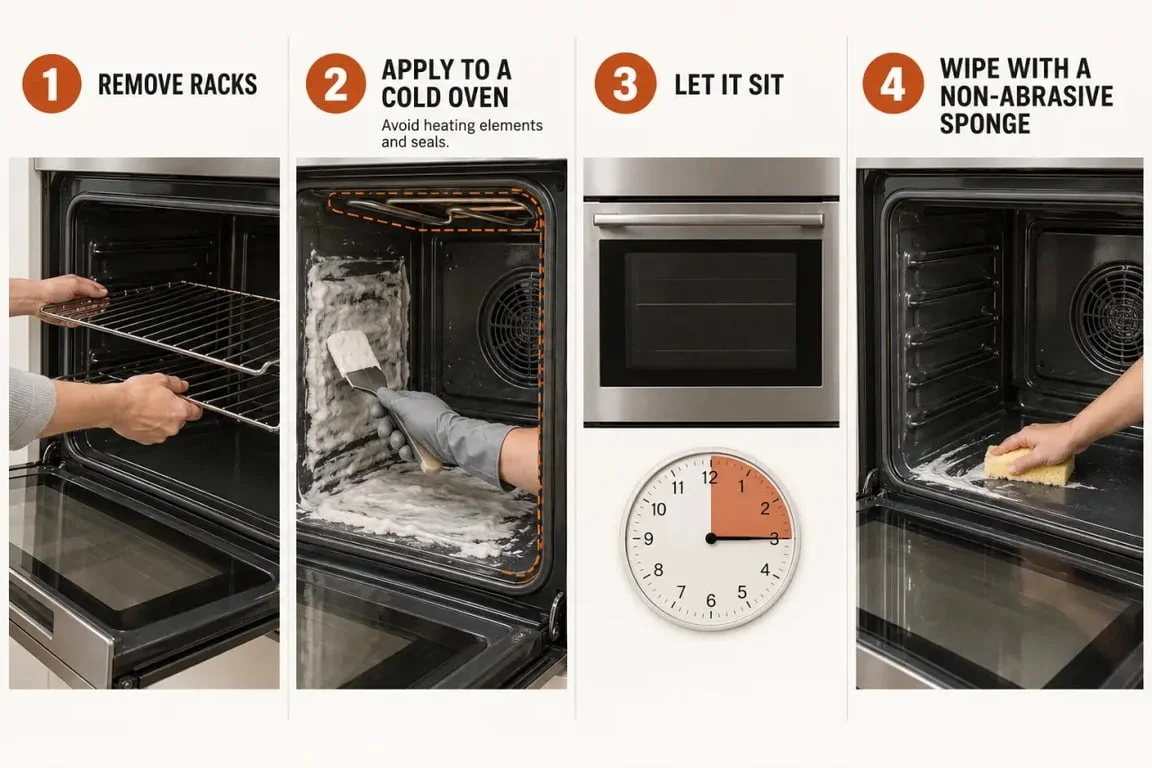
Mix 1/2 cup of baking soda with a few tablespoons of water until you obtain a spreadable paste. Put on gloves, then coat the cool oven interior. Concentrate on the floor, corners, and areas covered with burnt food. Keep the paste away from heating elements, fan openings, door seals, and any part the manual says must remain dry. Leave it overnight so it can soften greasy deposits before you wipe them away.
The next day, lift off the paste with a damp non-scratch sponge or cloth. Spray a little white vinegar onto any remaining baking soda residue. The fizz helps show where paste is still present. Wipe the cavity again with clean water, then dry it before using the oven.
Use commercial cleaner selectively on stubborn grease
For thick, dark buildup, a dedicated oven cleaner can reduce the amount of scrubbing. Open windows, wear gloves, and follow the product label exactly. Apply it only to compatible interior surfaces and leave it in place for the stated time. Then wipe the cavity thoroughly with a damp sponge.
Never mix cleaning products. In particular, do not combine commercial oven cleaner with vinegar, ammonia, or other household chemicals. If the label gives specific instructions about ventilation, contact time, or rinsing, follow them rather than adapting the process.
Clean the cavity in zones so you can judge the residue as you go. The lower rear area often collects drips, while upper surfaces receive a finer film of airborne grease. Start with the back and sides, then finish with the floor, where pooled grease may need the longest contact time. Avoid abrasive tools that can scratch the oven’s finish.
Wash the racks and door glass separately
Soak the racks instead of scrubbing them in place
Oven racks are easier to clean when removed. Soak them in hot water with dish soap in a tub, sink, or another suitable container. Once the residue has softened, wipe the bars with a non-scratch sponge and rinse them well. If a rack cannot lie fully underwater, soak one end for half an hour, rotate it, and repeat the process.
Check the manual before soaking racks with special coatings or ball-bearing slides. Avoid abrasive pads unless the manufacturer confirms that they are suitable. Harsh scrubbing can scratch the finish and leave a rougher surface where grime clings more easily.
Loosen grease on the glass before wiping
Place a warm, soapy cloth or paper towel over the inside door glass for about 10 minutes. This softens the greasy film so you can remove it with a non-scratch sponge. Wipe around the edges carefully, but do not flood the vents or force liquid between the glass panels.
If stains remain between the panes, consult the appliance manual instead of dismantling the door without guidance. The door, seals, and glass panels may require a specific cleaning method.
Prevent smoke, odors, and the next major clean
Accumulated grease can smoke during cooking and cause unpleasant odors. It can also increase the risk associated with residue left in a hot oven. Do not wait until the cavity is heavily blackened. Most families can schedule a thorough clean once or twice a year. If you roast, bake, or use the oven often, cleaning every 3 to 6 months, or around 4 to 5 times per year, keeps buildup more manageable.
- Wipe fresh spills once the oven has cooled.
- Place bubbling dishes on a baking tray to catch drips.
- Use non-scratch tools on enamel and glass.
- Keep the room ventilated when using a degreaser or self-clean cycle.
- Run the oven briefly after cleaning only when every surface is dry and all product residue has been removed.
If a stain remains after one treatment, repeat the soaking or paste stage instead of scraping hard. A longer contact time is often more effective than force. It also helps protect the oven’s coating while reducing the smoke and odors caused by leftover grease.
{“@type”:”Article”,”@context”:”https://schema.org”,”headline”:”Clean Your Oven Safely, From Light Splashes to Baked-On Grease”,”inLanguage”:”en-US”,”description”:”A dirty oven does not always need aggressive scrubbing. The best method depends on the residue: fresh splatters, a greasy film, or hard, baked-on grime. Let the oven cool…”}
Use the safest cleaning method first
Cleaning works best when you start with the least aggressive method that can solve the problem. Test products on a small hidden area, read the label, and give the cleaner enough contact time before scrubbing harder. Many stains become worse when heat, bleach or the wrong acid is used too early.
Never mix cleaning products unless the label clearly says it is safe. Bleach, ammonia, vinegar, peroxide and descaling products can react badly in the wrong combination. When in doubt, rinse the surface, ventilate the room and switch to a simpler method before trying another chemical.
Related guides to continue
To build a stronger understanding of this topic, continue with these related guides from the same site. They cover nearby decisions, maintenance points and practical details that often influence the final result.