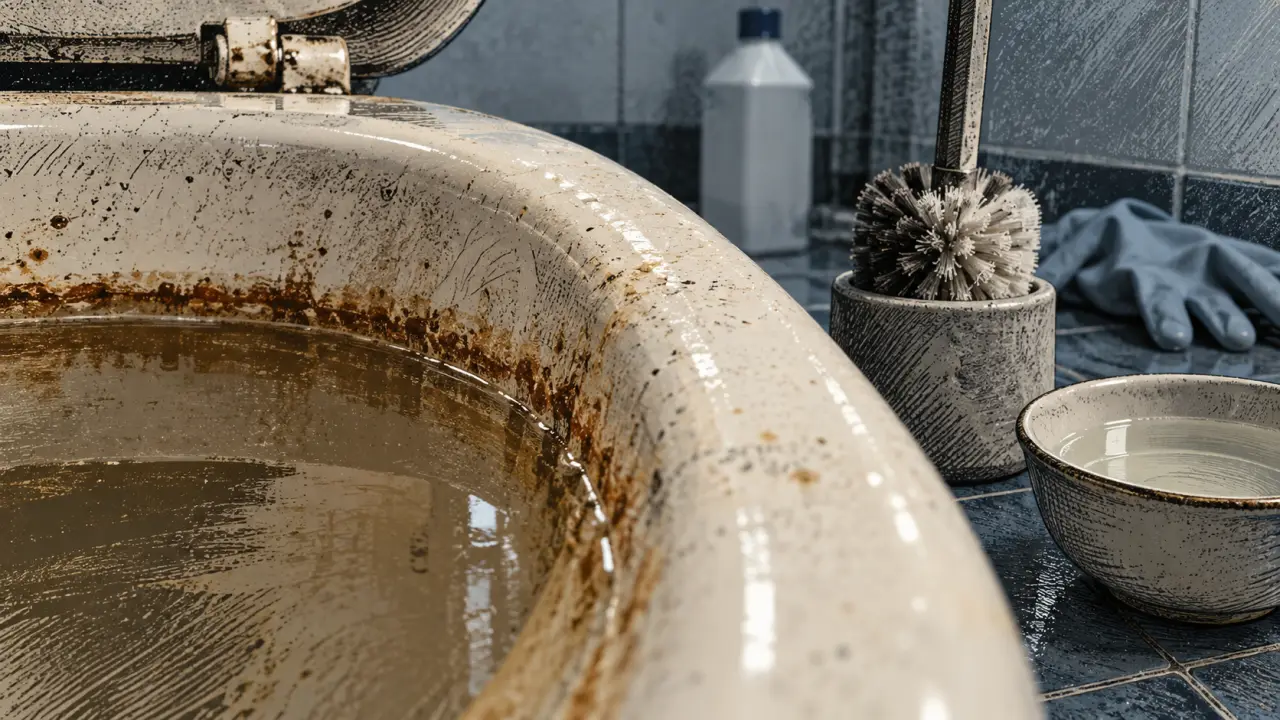
Brown stains in a toilet bowl usually come from mineral deposits, rust particles or grime trapped in limescale. They do not necessarily mean that the bowl has been cleaned poorly. Start with a mild acidic treatment, then move to controlled abrasion or a rust remover if necessary. The safest method depends on the stain and the condition of the porcelain.
Read the stain before choosing a cleaner
The colour, texture and location of the mark provide useful clues. A rough ring at the waterline often points to hard-water scale. The deposit may begin as white or translucent buildup, then turn tan or brown as it traps dirt. Reddish-brown streaks, especially beneath the rim, can indicate iron or rust. As little as approximately 0.3 parts per million of dissolved iron can cause visible staining. Dark brown or almost black marks may be linked to manganese.
- Crusty or chalky ring: limescale and hard-water minerals.
- Orange, red-brown or rusty streaks: iron in the water supply, corroded pipes or rusty tank components.
- Slippery brown or pink film: bacterial biofilm, often found where water remains still for long periods.
- Marks that return along the same line: a slow leak, low flow or minerals that continue entering the bowl.
Bleach can disinfect the bowl and lighten organic discolouration, but it does not dissolve the mineral bonds that form limescale. A bleached stain may therefore look better for a short time and then return after a few flushes.
Start with an acid soak for mineral rings
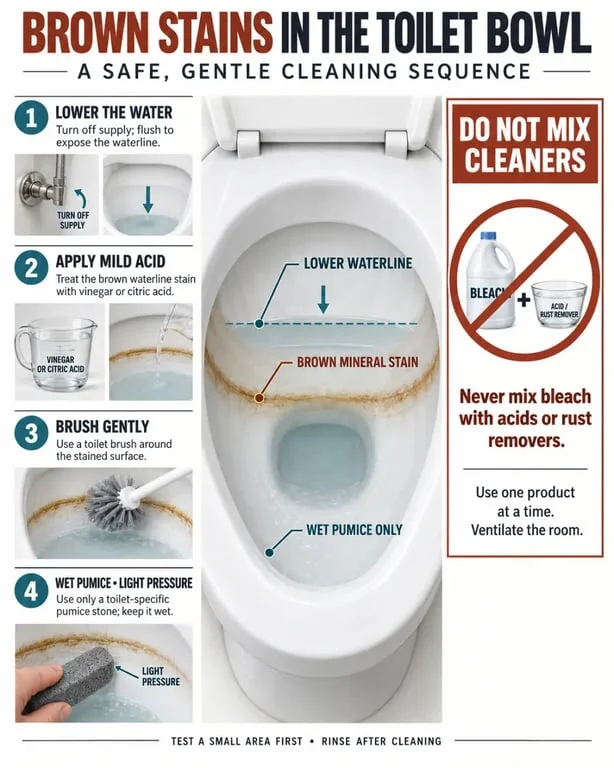
For most brown toilet stains, lower the water level first so the cleaner stays in contact with the ring. Shut off the water supply, flush once and use the toilet brush to push the remaining water away from the stained area. Wear gloves, open a window or switch on the ventilation fan.
Vinegar and baking soda for light deposits
Pour 1 cup of white vinegar around the stain, add 1 cup of baking soda, then follow with another 2 cups of vinegar. Leave the mixture for 10–15 minutes. Brush the area, then allow it to work for another 30 minutes if the deposit remains. Flush and check the surface.
Vinegar helps loosen calcium-based deposits, while baking soda provides gentle scrubbing action. This combination is best suited to light mineral buildup. It is less likely to remove deep rust or a heavily bonded ring in one treatment.
Citric acid for stubborn limescale
Citric acid is a stronger household option when vinegar has had limited effect. Apply 250 ml of citric acid powder as directed for the product, leave it for several hours or preferably overnight, then brush and flush thoroughly. Do not use it immediately after bleach or another cleaner. Rinse the bowl first and allow it to air out.
A toilet bowl is a small water environment, so recurring rings can be persistent. After treatment, regular brushing helps prevent mineral crystals from finding rough points on the surface where they can settle. This reduces the buildup that traps colour, odour and residue around the waterline.
Escalate carefully when the stain is set in
| Method | Best for | Contact time | Main precaution |
|---|---|---|---|
| Borax paste | Moderate rust marks and deposits | 20–30 minutes, or overnight if severe | Rinse fully before using another product |
| Wet pumice stone | Bonded mineral scale | Immediate, with light pressure | Keep both the stone and porcelain wet |
| Commercial rust remover | Deep iron or rust staining | Typically 5–15 minutes | Follow the label and ventilate the room |
Use abrasion only on a wet surface
Mix 1 cup of Borax with 1/2 cup of white vinegar to make a paste. Spread it over the mark and brush after the soaking period. If scale remains bonded to the porcelain, use a toilet-specific pumice stone. Keep the stone and bowl wet throughout the process, test a hidden area first and rub with light circular movements.
Never use a dry pumice stone or a coarse abrasive material. Scratching the glaze can make future staining easier. Stop if the mark does not respond to light pressure rather than trying to remove it by force.
Choose a commercial rust remover only when the stain clearly appears rust-coloured and resists gentler methods. These products may contain acids such as oxalic acid or hydrochloric acid. Gloves, eye protection and good ventilation are essential. Read the instructions, respect the stated contact time and flush thoroughly once the treatment is complete.
Keep dangerous product combinations out of the bathroom
Never mix bleach with vinegar, citric acid, rust remover, muriatic acid or any other cleaner. Do not layer products in the bowl. Flush and rinse between treatments. Chemical mixtures can release hazardous fumes, while strong acids may damage plumbing components, septic systems or the porcelain finish when used incorrectly.
Muriatic acid is an extreme treatment, not a routine household cleaner. A 10% solution is sometimes used in quantities of approximately 1 cup for no more than 30 minutes, but this method carries significant risk. Seeking professional help is safer than experimenting with it. If it has been used, ventilate the room for at least 30 minutes after treatment.
Stop brown stains from coming back
When a clean bowl develops a brown ring again quickly, look for the cause instead of repeatedly using a stronger cleaner. Inspect the tank for corroded bolts, a deteriorating flapper or rusty fill-valve components. A slow tank leak can keep water moving over one area and leave a distinctive recurring line.
- Brush the waterline regularly before minerals harden.
- Check whether stains also appear on sinks, taps or appliances. This may suggest hard water, iron or manganese in the water supply.
- Address low flow or water that remains stagnant for long periods.
- Consider a water-quality and plumbing assessment if the stains return despite cleaning.
Call a plumber when brown staining is widespread, returns within days, appears with discoloured tap water or follows visible tank corrosion. If the porcelain glaze is worn or scratched, cleaning may no longer restore a smooth surface. Restoration or toilet replacement may then provide a more durable solution.
{“@type”:”Article”,”@context”:”https://schema.org”,”headline”:”Why Bleach Leaves Brown Toilet Rings Behind, and What Removes Them”,”inLanguage”:”en-US”,”description”:”Brown stains in a toilet bowl usually come from mineral deposits, rust particles or grime trapped in limescale. They do not necessarily mean that the bowl has been cleaned poorly….”}
Related guides to continue
To build a stronger understanding of this topic, continue with these related guides from the same site. They cover nearby decisions, maintenance points and practical details that often influence the final result.