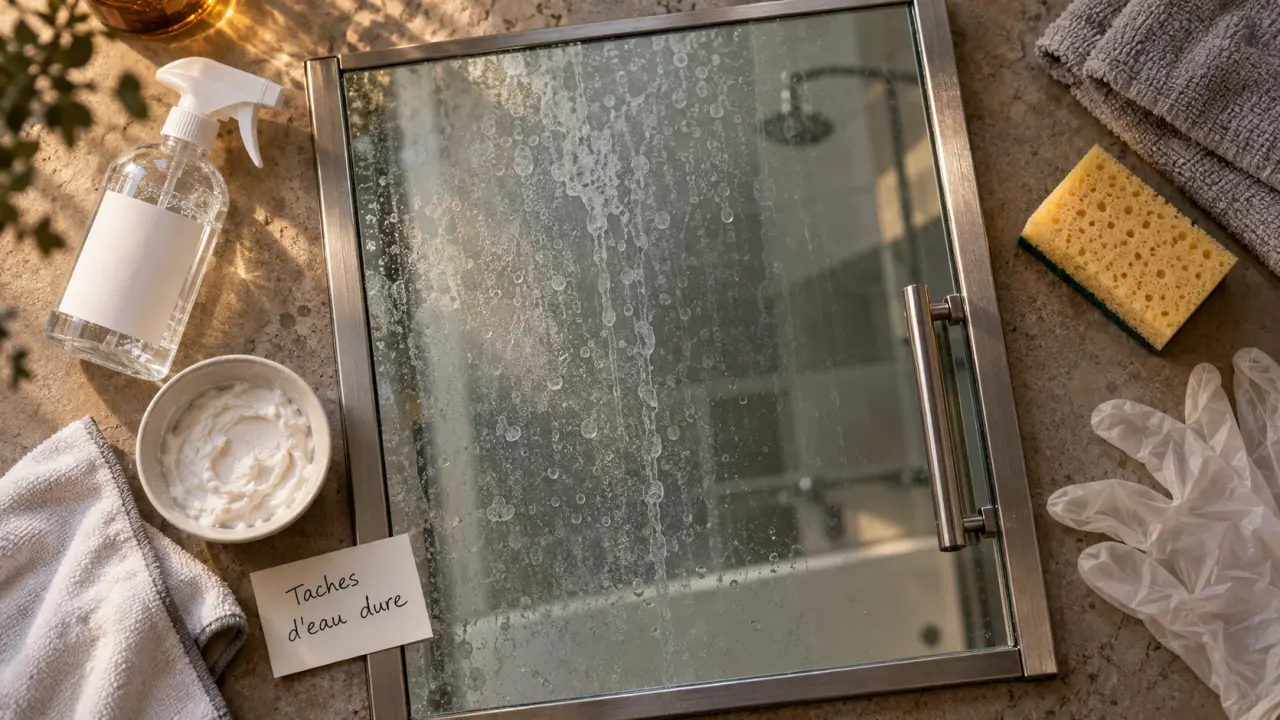
Hard water stains can make clear glass look permanently cloudy, especially on shower doors, windows, and glassware. Most marks can be removed when you match the method to the amount of mineral buildup and avoid scratching the surface.
Why hard water leaves cloudy marks on glass
Hard water contains dissolved minerals, mainly calcium and magnesium. When droplets dry on glass, the water evaporates and the minerals remain. Over time, they form a chalky film or white spots known as mineral scale. In a shower enclosure, soap residue can stick to this scale, creating a dull layer that is harder to dissolve than a fresh water mark.
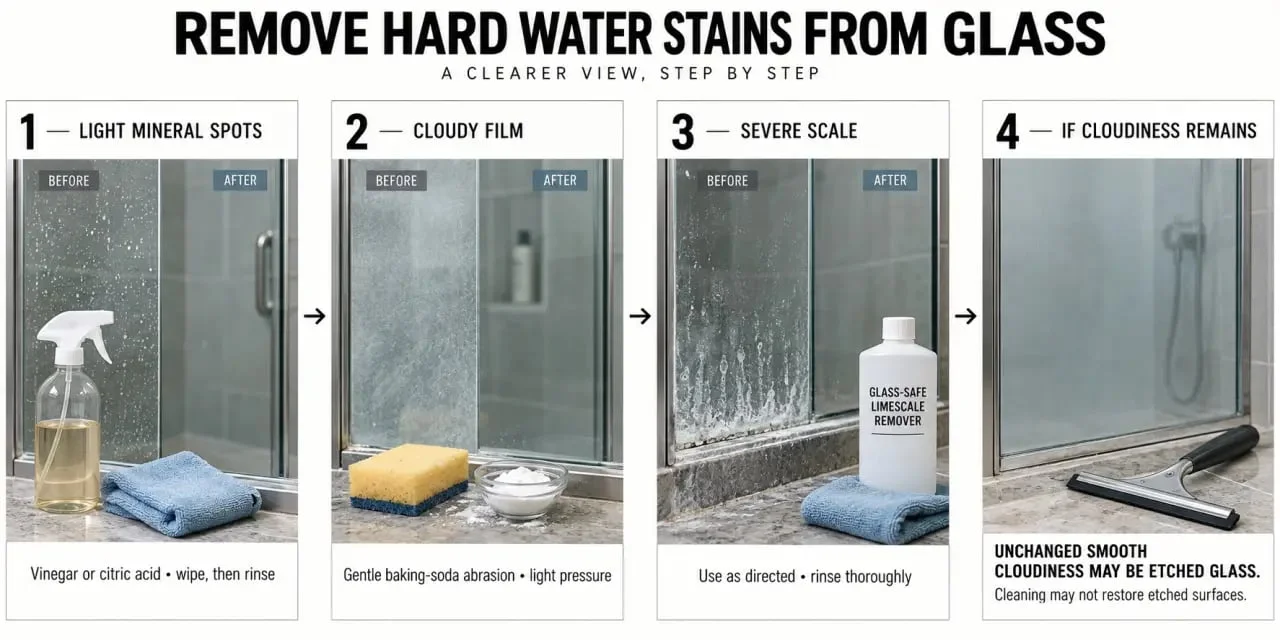
It helps to distinguish a deposit from etched glass. If a mark feels slightly rough or becomes less visible when the glass is wet, it is probably mineral buildup. If the glass remains cloudy and smooth after several careful cleaning attempts, the minerals may have damaged the surface. Cleaning can improve its appearance, but it cannot always restore etched glass completely.
Start with the least aggressive cleaning method
Before applying a strong product, remove loose dust and soap film with warm water and a soft microfiber cloth. This keeps grit from being rubbed across the glass. Test every cleaner on a discreet corner first, especially on tinted, coated, or treated shower glass.
Use vinegar or citric acid for fresh mineral deposits
White vinegar is acidic, so it can loosen calcium-based deposits. Mix equal parts white vinegar and warm water in a spray bottle. Apply the solution generously and leave it on the glass for 10 to 15 minutes. Keep the surface wet instead of allowing the solution to dry. Wipe with a microfiber cloth, rinse thoroughly, and dry with a lint-free towel.
Citric acid is another useful option. Dissolve it in warm water according to the product directions, then apply and wipe it away in the same way. Lemon juice may help with light spots, but it is less practical for a large shower door because it dries quickly and can leave residue if you do not rinse the glass well.
Add gentle abrasion only where needed
If deposits remain after using an acidic cleaner, make a thick paste with baking soda and a little water. Apply it with a damp soft cloth and rub gently in small circles. Baking soda provides mild friction without the harshness of scouring powder. Rinse the glass well, then dry it so you can check whether the marks have lifted.
- Use microfiber, a soft sponge, or a non-scratch pad approved for glass.
- Avoid steel wool, razor blades, and gritty scouring powders unless the glass manufacturer specifically permits them.
- Never mix vinegar or citric acid with bleach or other cleaners.
When vinegar does not work, choose the next step carefully
Old scale often contains several layers: minerals closest to the glass, soap residue above them, and new spots on top. Each wet-and-dry cycle adds to the buildup. Vigorous scrubbing alone often produces disappointing results because it increases the risk of scratching without dissolving the deposits.
Instead, let an appropriate cleaner remain on the surface long enough to soften the buildup. This is usually more effective and safer for the glass than immediately applying more pressure.
| Stain level | Best first choice | What to do next |
|---|---|---|
| Light spots | Vinegar or citric acid solution | Wipe, rinse, and dry |
| Visible cloudy film | Acidic cleaner followed by baking soda paste | Repeat once before escalating |
| Thick, stubborn scale | Commercial limescale remover labeled safe for glass | Follow the label exactly and ventilate the room |
| Cloudiness that never changes | Assess for etching | Consider glass restoration advice or replacement |
A specialty bathroom or limescale cleaner can help with severe buildup, but a stronger product is not automatically better. Some abrasive cleaners can leave fine scratches that collect more residue later. Choose a product that states it is suitable for glass, wear gloves, and never leave it on longer than directed.
A drill brush may speed up cleaning on robust shower glass, but use only a soft attachment and light pressure. Do not use this method on delicate coatings. When the glass remains cloudy despite careful cleaning, stop increasing the pressure. The surface may be etched rather than dirty.
Adjust the method to the glass surface
Shower doors are often the most difficult to clean because they receive daily spray, body products, and limited airflow. Work in small sections so the cleaner does not dry before you wipe it away. For windows, avoid cleaning in direct sun because heat can dry the solution too quickly and create streaks. On glassware, use a diluted acidic solution briefly, rinse very well, and keep abrasive pastes away from decorative finishes.
Coated or easy-clean shower glass needs extra caution. Its coating helps repel water, but harsh chemicals and rough tools can weaken it. Check the enclosure care instructions before using acids, powders, or a commercial remover. If the manufacturer recommends a specific cleaner, follow that recommendation instead.
Keep stains from returning after cleaning
The most effective prevention starts while the glass is still wet. Use a squeegee after each shower to push water toward the drain, then wipe the edges and metal tracks with a dry microfiber cloth. This removes the droplets that would otherwise evaporate and leave mineral spots.
- Use a daily shower spray if it is compatible with your glass and hardware.
- Clean the door before buildup becomes visible instead of waiting for a thick film.
- Apply a glass sealant only if it is designed for your type of shower glass.
- Improve bathroom ventilation so moisture does not linger on the enclosure.
If stains return quickly throughout the home, including on shower doors, taps, windows, and glassware, a water softener may address the root cause by reducing the mineral content in the water supply. It will not remove existing scale or eliminate the need to dry the glass, but it can reduce the frequency and intensity of future deposits.
{“@type”:”Article”,”@context”:”https://schema.org”,”headline”:”Remove Hard Water Stains From Glass, Even When Vinegar Fails”,”inLanguage”:”en-US”,”description”:”Hard water stains can make clear glass look permanently cloudy, especially on shower doors, windows, and glassware. Most marks can be removed when you match the method to the…”}
Related guides to continue
To build a stronger understanding of this topic, continue with these related guides from the same site. They cover nearby decisions, maintenance points and practical details that often influence the final result.