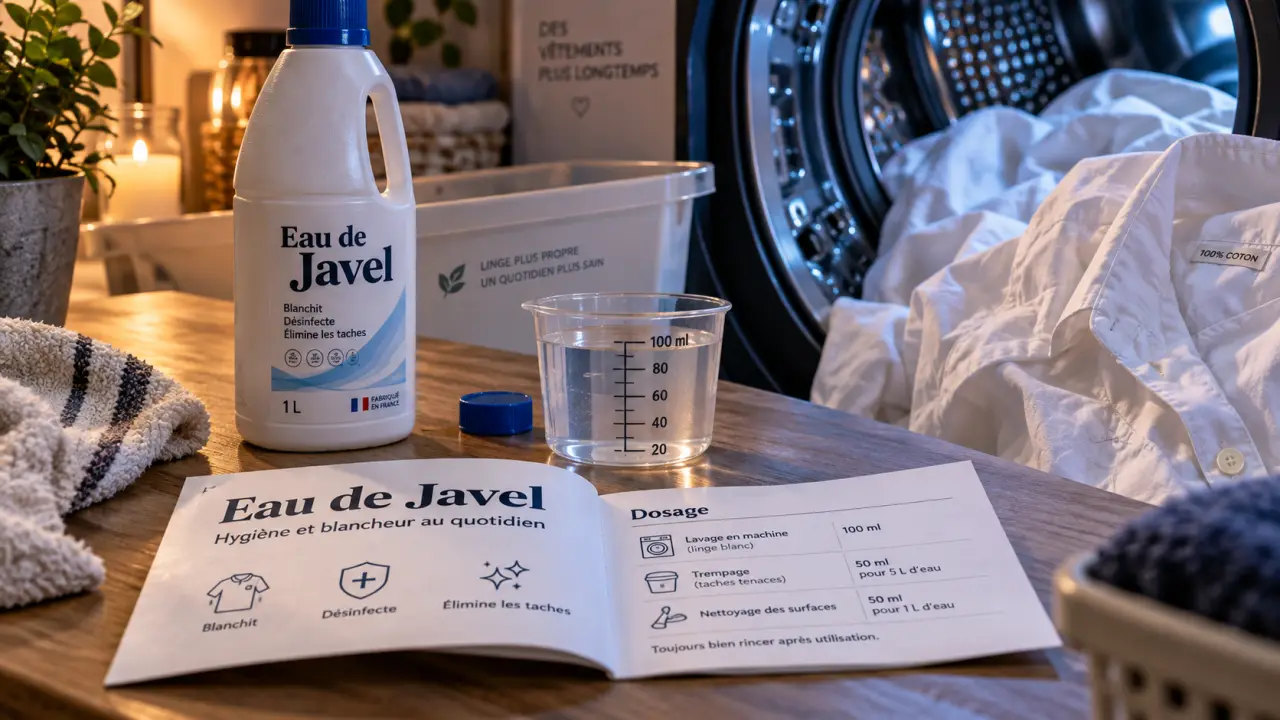
Bleach can brighten white fabrics, remove stubborn stains and odors, and sanitize suitable items when the product label allows it. It is also easy to misuse. The safest method starts with the care label, the right bleach type, and a measured dose, not a larger amount.
Choose the bleach that matches the fabric and the goal
Liquid laundry bleach comes in two main types. They do different jobs and are not interchangeable.
| Type of bleach | Best use | Suitable laundry | Main caution |
|---|---|---|---|
| Chlorine bleach | Whitening, stain removal, odor control, and sanitizing when the label carries the appropriate claim | Bleach-safe white fabrics | Can fade colors and weaken unsuitable fibers |
| Non-chlorine bleach | Brightening and stain removal with a gentler approach | Colored or patterned items when the care label allows it | It is not automatically suitable for every fabric or every stain |
Chlorine bleach contains sodium hypochlorite, an oxidizing ingredient that breaks down soils and stains. It is the stronger option for dingy whites, mildew marks, body oils, and ground-in dirt. Non-chlorine bleach is also called oxygen bleach or color-safe bleach. It is often the better starting point for washable colored clothing, but “color-safe” still requires a care-label check.
Cleaning and sanitizing are different outcomes
A garment can look clean without being sanitized. If sanitizing is the goal, choose an unscented, EPA-registered bleach with a germ-kill claim on the label, then follow the instructions exactly. Scented, Splash-Less, No-Splash, store-brand, and warehouse-store products should not be assumed to sanitize simply because they contain bleach. The formulation and the label claim determine whether the product is suitable.
Check the garment before bleach goes near it
Read the care label before sorting the load. Do not use chlorine bleach on wool, silk, mohair, leather, spandex, acetate, or garments with flame-retardant finishes unless the manufacturer explicitly permits it. These materials may discolor, become brittle, lose stretch, or suffer permanent damage.
Test colorfastness on a hidden area
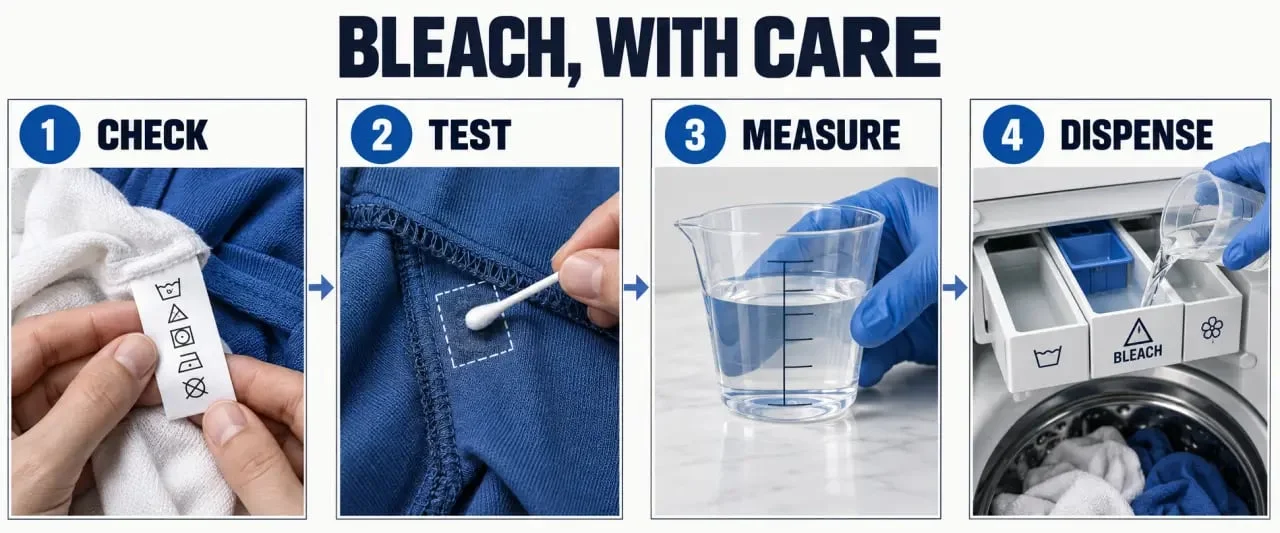
For a colored item that appears bleach-safe, test an inconspicuous seam or hem first. Apply a small amount of the diluted solution recommended on the product label, then rinse and let the area dry. If the color changes, do not bleach the item. This precaution is especially useful for dark denim, prints, embroidery, and garments with contrasting trims.
An overloaded washer cannot circulate water, detergent, and bleach evenly. Some areas of the fabric may receive a concentrated amount of product while others receive very little. Leave enough room for the load to tumble freely. This improves washing performance and reduces the risk of streaks or uneven fading.
Add bleach to the washer without creating bleach spots
The most common mistake is pouring undiluted chlorine bleach directly onto clothing. Even a white item can develop weakened areas, yellowing, or holes after concentrated contact. Use the bleach dispenser whenever your washer has one, and never fill it beyond the maximum line.
Standard and high-efficiency washers need different amounts
For a standard washing machine, the recommended amount can be up to ⅓ cup per wash load. If there is no dispenser, dilute the measured bleach in 1 quart of water and add it 5 minutes after the wash cycle begins, once the drum contains water and the load is moving. Another instruction specifies ¾ cup of liquid chlorine bleach. These differences show why the product label and washer manual should take priority over a general rule.
For a high-efficiency washer, the cited amount is ¼ cup per load. HE machines use less water, so the dispenser is particularly important because it releases the product at the appropriate point in the cycle. Add detergent to its own compartment, select a cycle suitable for the fabric, and avoid overfilling the drum.
- Sort laundry by color and fabric type.
- Check care labels and perform a colorfastness test when needed.
- Add detergent as directed for your washer.
- Measure the bleach instead of estimating by eye.
- Pour it into the bleach dispenser, or dilute it if your standard machine has no dispenser.
- Run the recommended cycle and allow a complete rinse.
Handle stains, odors, and hand washing with dilution first
Never spot-treat a garment with full-strength bleach. For a bleach-safe item, prepare a diluted solution according to the product instructions, test a hidden area, and treat only after the test is successful. Rinse thoroughly afterward. If the stain is on silk, wool, spandex, or another delicate fiber, skip bleach and use a method approved for that fabric.
Hand washing requires short, controlled contact
A hand-washing method uses ¼ cup of bleach in 1 gallon of cool water, with each garment soaked for 5 minutes before washing and rinsing thoroughly. Keep garments fully submerged and separated so the solution reaches them evenly. Do not extend the soaking time in the hope of getting a whiter result. Longer exposure can increase fiber damage.
Use bleach safely, and know when to stop
More bleach does not automatically mean cleaner laundry. Follow the dosage on the bottle, ventilate the room, and keep the product away from children and pets. Never mix bleach with other cleaning products. Do not add it to a washer that already contains another chemical unless both product labels specifically say that the combination is safe.
If a load develops a strong bleach odor, run an additional rinse before drying. If you notice fading, a rough texture, or damage after washing, stop using bleach on that fabric and review the care label. For sanitizing, the guidance requires laundry to remain in contact with the bleach solution for 10 minutes. Do not improvise this process with a product that lacks the required germ-kill claim.
{“@type”:”Article”,”@context”:”https://schema.org”,”headline”:”The Bleach Dispenser Mistake That Can Ruin Your Laundry”,”inLanguage”:”en-US”,”description”:”Bleach can brighten white fabrics, remove stubborn stains and odors, and sanitize suitable items when the product label allows it. It is also easy to misuse. The safest method…”}
Use the safest cleaning method first
Cleaning works best when you start with the least aggressive method that can solve the problem. Test products on a small hidden area, read the label, and give the cleaner enough contact time before scrubbing harder. Many stains become worse when heat, bleach or the wrong acid is used too early.
Never mix cleaning products unless the label clearly says it is safe. Bleach, ammonia, vinegar, peroxide and descaling products can react badly in the wrong combination. When in doubt, rinse the surface, ventilate the room and switch to a simpler method before trying another chemical.
Related guides to continue
To build a stronger understanding of this topic, continue with these related guides from the same site. They cover nearby decisions, maintenance points and practical details that often influence the final result.