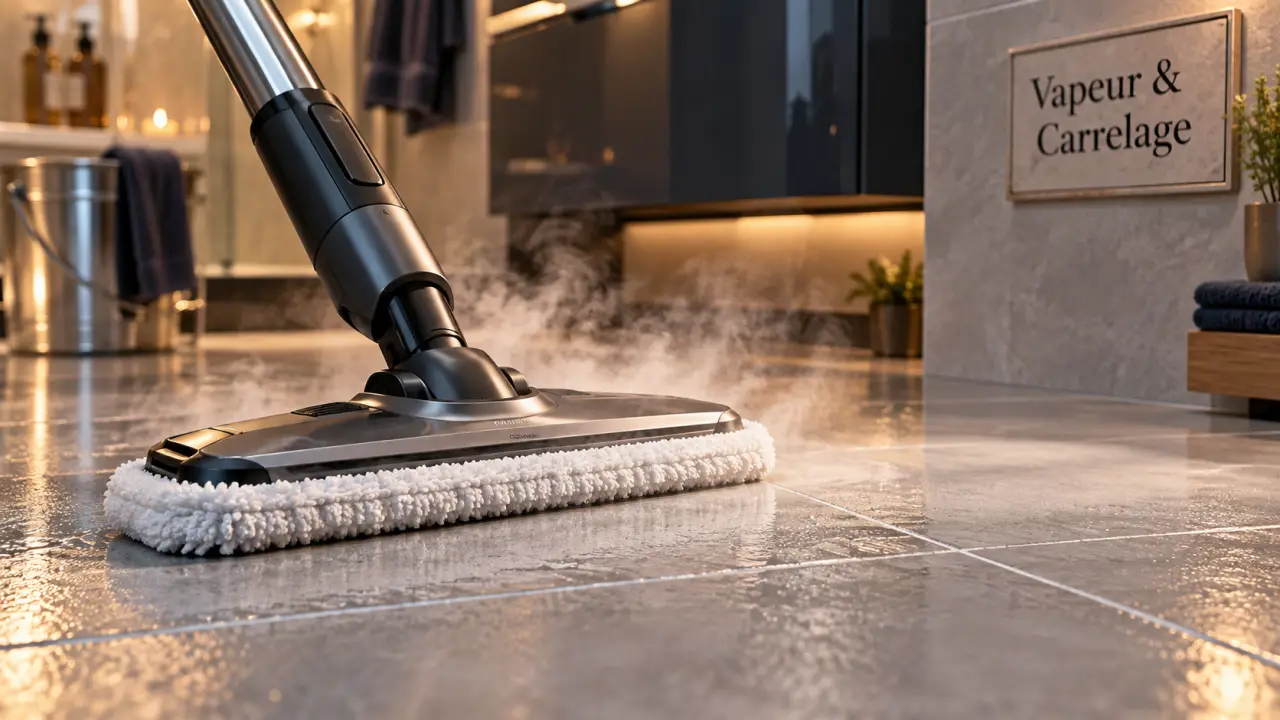
Tile is well suited to steam cleaning, but the best steam mop for your floor depends on the tile finish, grout condition, room size, and cleaning routine. A well-matched model can lift everyday film and sticky marks without a bucket. The wrong one may leave too much moisture, miss grout lines, or feel too cumbersome for regular use.
Start with your tile type and grout condition
Ceramic and porcelain tiles are generally robust choices for steam mopping, especially when the grout is intact. Before using any steam mop, check the flooring manufacturer’s care guidance. Heat and moisture may be unsuitable for damaged grout, loose tiles, unsealed natural stone, or floors with failing sealant.
Match the mop to the surface, not just the room
For smooth porcelain, a standard microfiber pad and controllable steam output are usually enough for routine cleaning. Textured tile needs more friction. Look for a pad with a slightly bristly texture or a machine with rotating pads. These designs can reach the small dips in the surface that a soft pad may glide over.
Grout is often the deciding factor in kitchens and bathrooms. A steam mop can refresh the tile surface, but it does not replace targeted grout cleaning when joints are deeply stained. A model with a detachable handheld steamer or focused nozzle may help with edges and grout lines, provided the manufacturer approves its use on your grout and tile finish.
The six buying checks that matter most on tile floors
Ignore long feature lists at first. Compare steam mops using the details that affect cleaning results and everyday comfort.
- Variable steam: A low setting suits frequent maintenance, while stronger steam is more useful for dried-on residue.
- Pad texture: A dense or lightly textured pad gives better contact on uneven tile and grout edges than a very soft, flat pad.
- Tank access: A refillable water tank should be easy to remove, fill, and reinstall without spills.
- Heat-up signal: A ready indicator light tells you when the mop has reached its working temperature.
- Cord reach: A longer cord means fewer outlet changes, particularly in open kitchens or tiled hallways.
- Head movement: A low-profile, swiveling mop head makes it easier to clean around toilets, cabinets, and chair legs.
Think of the mop head as the point of contact between steam, pressure, and the floor. It needs to stay stable rather than float over the surface. If the pad is too thick, too soft, or poorly fitted, cleaning force is distributed unevenly. A well-designed head and a clean, properly attached pad can matter more than a large water tank.
Compare steam mop formats before choosing
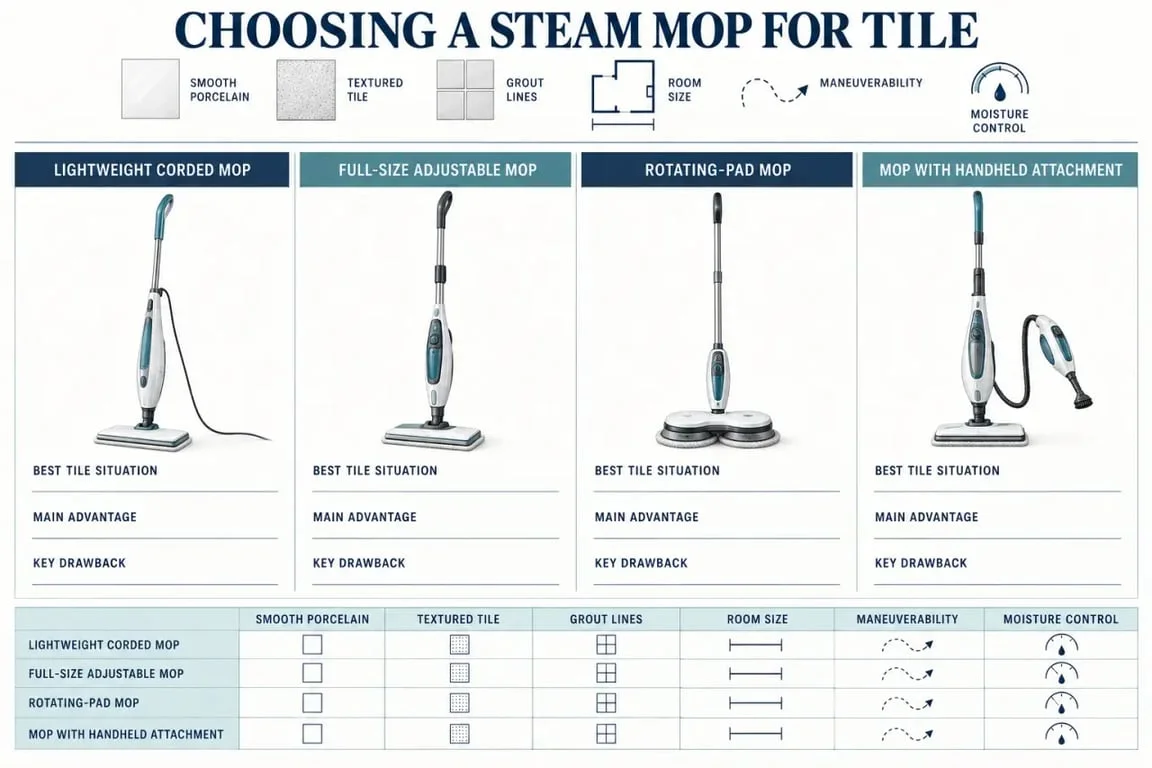
| Format | Best for | Main advantage | Watch for |
|---|---|---|---|
| Lightweight corded steam mop | Small to medium tiled rooms | Easy handling and quick routine cleaning | Smaller reservoir and less scrubbing pressure |
| Full-size adjustable steam mop | Regular kitchen and hallway cleaning | Good balance of runtime, reach, and control | Larger storage footprint and greater weight |
| Rotating-pad steam mop | Textured tile and stubborn residue | Extra mechanical action on sticky spots | Higher weight, price, and pad replacement cost |
| Mop with handheld attachment | Tile plus edges, fixtures, and other sealed surfaces | More versatile cleaning options | Attachments can add bulk without improving floor cleaning |
For a large home, prioritize tank capacity and cord length over a compact body. A larger reservoir can reduce interruptions during a longer cleaning session. For a small bathroom or apartment, a lighter model that heats quickly may offer better value because it is easier to store and more likely to be used consistently.
Judge cleaning power by the stains you actually have
The best steam mop for tile is not necessarily the one with the most impressive marketing claim. Consider what it needs to remove. Fine dust and light kitchen splashes call for steady steam and a washable microfiber pad. Dried food, muddy footprints, crayon, and sticky drink residue benefit from adjustable steam, a textured pad, and slow, overlapping passes.
Use steam as a finishing clean, not a substitute for pickup
Vacuum or sweep first. Loose grit can become trapped under the pad, reduce its effectiveness, and potentially dull the appearance of glossy tile over time. Then move the mop slowly instead of rushing back and forth. Pause briefly over a mark to let the steam soften the residue, then make a controlled pass rather than repeatedly soaking the same spot.
A steam mop should leave the floor lightly damp, not wet. If moisture remains for a long time, reduce the steam setting, replace a saturated pad, or move the mop more quickly. This precaution matters near grout lines and transitions to wood, laminate, or other moisture-sensitive flooring.
Make your purchase pay off with simple maintenance
Choose a model with replacement pads that are easy to find. Pads lose efficiency when they become heavily soiled, coated with fabric softener, or worn thin. Keep at least one spare pad available. During a larger cleaning session, you can then change it instead of spreading dirt from one room to another.
- Empty the reservoir after use and let the machine cool before storing it.
- Wash the pads according to the manufacturer’s instructions. Avoid products that reduce microfiber absorbency.
- Follow the manual’s water guidance, particularly if hard water is common in your area.
- Check the steam vents and pad fasteners periodically for buildup or damage.
For most tile floors, a dependable corded model with adjustable steam and a swiveling head is the strongest all-round choice. Choose rotating pads when textured tile or persistent kitchen grime is the main challenge. Select a handheld attachment only when you will use its extra functions on edges, fixtures, or other approved sealed surfaces.
{“@type”:”Article”,”@context”:”https://schema.org”,”headline”:”The Best Steam Mop for Tile Depends on Six Practical Checks”,”inLanguage”:”en-US”,”description”:”Tile is well suited to steam cleaning, but the best steam mop for your floor depends on the tile finish, grout condition, room size, and cleaning routine. A well-matched model can…”}
Use the safest cleaning method first
Cleaning works best when you start with the least aggressive method that can solve the problem. Test products on a small hidden area, read the label, and give the cleaner enough contact time before scrubbing harder. Many stains become worse when heat, bleach or the wrong acid is used too early.
Never mix cleaning products unless the label clearly says it is safe. Bleach, ammonia, vinegar, peroxide and descaling products can react badly in the wrong combination. When in doubt, rinse the surface, ventilate the room and switch to a simpler method before trying another chemical.
Related guides to continue
To build a stronger understanding of this topic, continue with these related guides from the same site. They cover nearby decisions, maintenance points and practical details that often influence the final result.