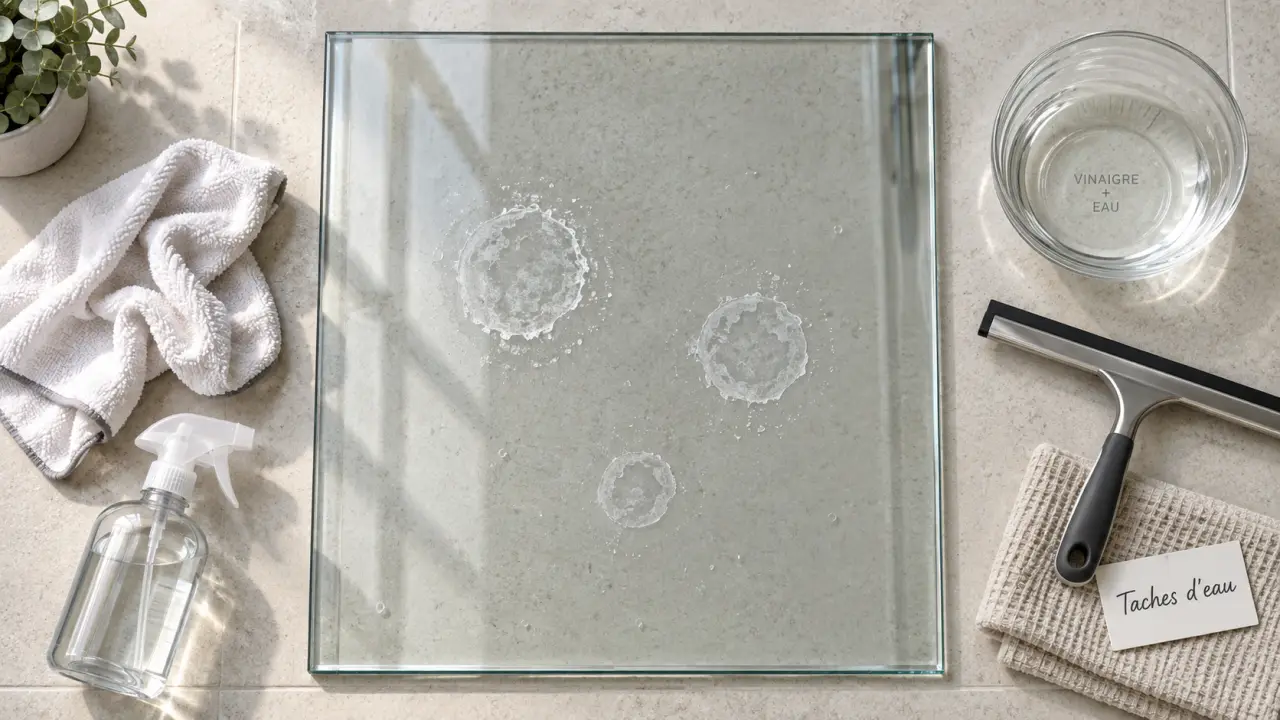
Water spots can make a shower door, window, or drinking glass look permanently cloudy. In most cases, the marks are mineral deposits left behind when hard water evaporates. Calcium and magnesium remain on the surface, creating a pale film or ring. The right approach is to loosen or dissolve that residue gently, then rinse and dry the glass before a new layer forms.
Start by identifying the mark on the glass
Fresh water spots usually look like pale dots, rings, or a hazy film. They may feel slightly rough when you run a clean fingertip over the dry glass. These marks are mineral residue, not ordinary dust, so wiping with a dry cloth rarely removes them.

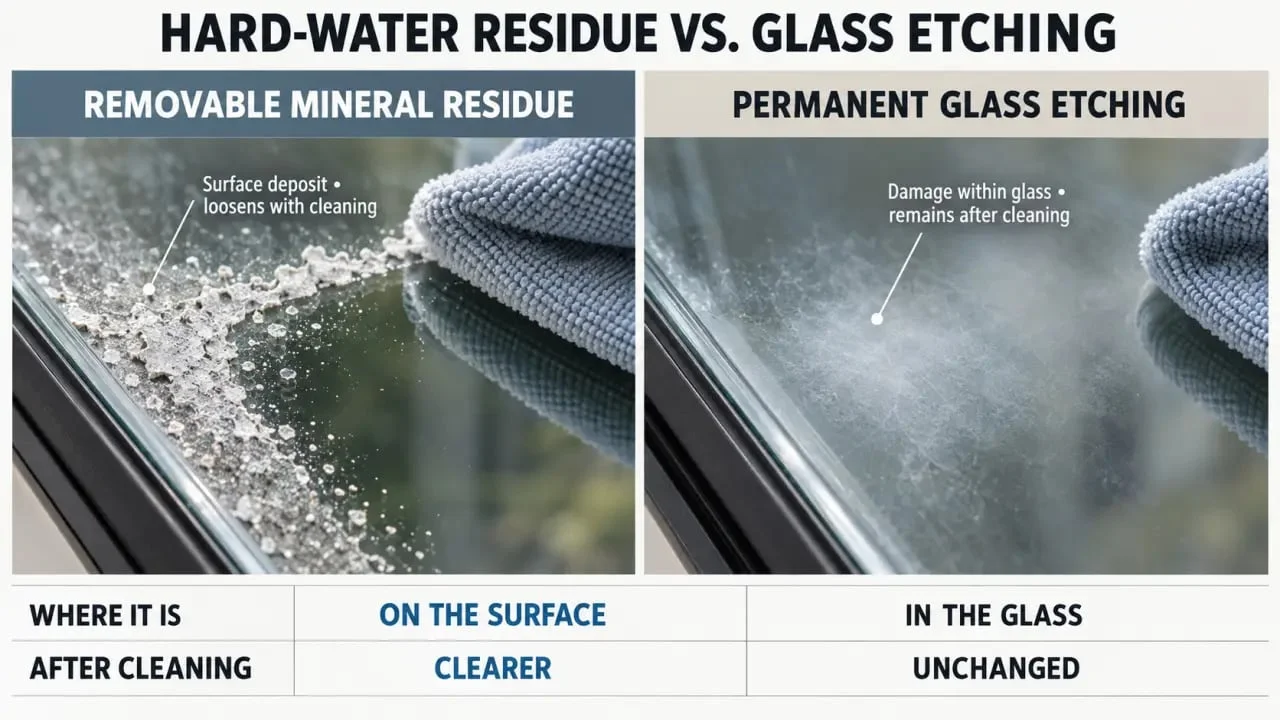
Older stains can be harder to clean because repeated wet-and-dry cycles build up several layers of minerals. If the glass remains dull after careful cleaning but feels completely smooth, the surface may be etched. Glass etching means the glass itself has been altered rather than covered with residue. Household cleaners cannot restore deeply etched glass, although they can still remove mineral buildup around it.
Use a simple vinegar treatment for most water spots
A vinegar-and-water solution is a practical first approach for shower doors, windows, glassware, and glass bathroom fixtures. Vinegar is acidic, so it helps break down calcium and magnesium deposits without aggressive scrubbing.
- Remove loose dirt first. Wipe the glass with a damp microfiber cloth so grit does not drag across the surface.
- Mix equal parts white vinegar and water. Pour the solution into a spray bottle or apply it directly with a cloth.
- Wet the stained area thoroughly. On a vertical shower door, press a vinegar-soaked microfiber cloth against the marks to keep the solution in contact with them.
- Let the solution work. Do not allow it to dry completely on the glass. Reapply it if necessary to keep the area wet.
- Wipe gently. Use a clean microfiber cloth and small, overlapping motions instead of a rough scouring pad.
- Rinse with clean water and dry immediately. Finish with a lint-free towel or dry microfiber cloth to remove loosened residue and reduce streaks.
Never mix vinegar with bleach or other household cleaners. Test the solution in an inconspicuous area first if the glass is coated, tinted, frosted, or installed beside natural stone. Acidic liquids can affect some surrounding materials and surface treatments.
Choose the right method when vinegar is not enough
Different stains require different levels of cleaning. Start with the least abrasive option and move to a stronger method only when mineral deposits remain visible after rinsing and drying.
| Method | Best for | How to use it safely |
|---|---|---|
| Vinegar and water | Light to moderate hard-water stains | Apply the solution, keep the surface wet, wipe gently, rinse, and dry. |
| Lemon juice | Fresh spots and small glass items | Apply the juice with a cloth or use half a lemon gently, then rinse well. |
| Baking soda paste | Thicker mineral buildup | Mix baking soda with a little water, rub lightly with microfiber, then rinse thoroughly. |
| Commercial hard-water cleaner | Persistent deposits | Follow the label exactly and check compatibility with the glass and nearby surfaces. |
Why baking soda needs a light touch
Baking soda provides mild mechanical action, which can help lift stubborn residue after an acidic treatment. Make a soft paste with water instead of applying dry powder directly. Use only gentle pressure and a soft cloth. Avoid steel wool, harsh scrubbers, razor blades, and abrasive powders because they can scratch the glass or damage a protective coating.
When to stop repeating DIY treatments
If several careful treatments make no difference, inspect the glass in daylight from an angle. A cloudy area that looks unchanged, feels smooth, and appears to sit within the glass may be surface etching. At that point, repeated abrasion can make the appearance worse. A professional glass restoration service can assess whether polishing is appropriate, especially for a large shower enclosure or an expensive window.
Do not overlook the places that hold water
On a shower door, the visible panel is not always the source of recurring spots. Bottom tracks, rubber seals, hinges, and overlapping door edges can trap small pools of mineral-rich water after the rest of the glass seems dry. When that water splashes, wicks upward, or evaporates slowly, it feeds new deposits. Clean the drainage channels and dry these narrow areas with a cloth to reduce the stubborn line of buildup that keeps returning at the bottom of the door.
For exterior windows, check for dripping gutters, leaking sprinkler heads, or runoff that repeatedly reaches the same pane. For glassware, spots often develop when items air-dry after washing. Drying them with a lint-free towel while the glass is still clean prevents minerals from setting in place.
Keep glass clear with a prevention routine
Prevention is easier than removing old deposits. After each shower, use a squeegee to pull excess water down the glass, then dry the lower edge, seals, and metal fixtures with a microfiber cloth. This quick routine removes water that would otherwise evaporate and leave minerals behind.
- Use a squeegee after showers or whenever glass is regularly splashed.
- Dry windows and glass fixtures after washing them.
- Clean small spots promptly instead of waiting for a cloudy film to form.
- Consider a glass sealant if water frequently beads and dries on a shower enclosure.
- Investigate a water softener if hard-water stains return throughout the home despite regular cleaning.
A glass sealant can make mineral adhesion more difficult, but it does not remove the need to dry the surface. A water softener addresses the underlying issue by reducing minerals in the household water supply. It may be worth considering when spots repeatedly appear on glass, fixtures, and appliances.
{“@type”:”Article”,”@context”:”https://schema.org”,”headline”:”Water Spots on Glass: Remove Them Before Mineral Deposits Turn Into Etching”,”inLanguage”:”en-US”,”description”:”Water spots can make a shower door, window, or drinking glass look permanently cloudy. In most cases, the marks are mineral deposits left behind when hard water evaporates….”}
Use the safest cleaning method first
Cleaning works best when you start with the least aggressive method that can solve the problem. Test products on a small hidden area, read the label, and give the cleaner enough contact time before scrubbing harder. Many stains become worse when heat, bleach or the wrong acid is used too early.
Never mix cleaning products unless the label clearly says it is safe. Bleach, ammonia, vinegar, peroxide and descaling products can react badly in the wrong combination. When in doubt, rinse the surface, ventilate the room and switch to a simpler method before trying another chemical.
Related guides to continue
To build a stronger understanding of this topic, continue with these related guides from the same site. They cover nearby decisions, maintenance points and practical details that often influence the final result.